
Focused shockwave therapy for Venous / arterial ulcers.
Venous and arterial ulcers are chronic wounds that develop when the circulation in the legs is impaired. Although both can cause persistent ulcers, they have different underlying causes and require different approaches to assessment and treatment.
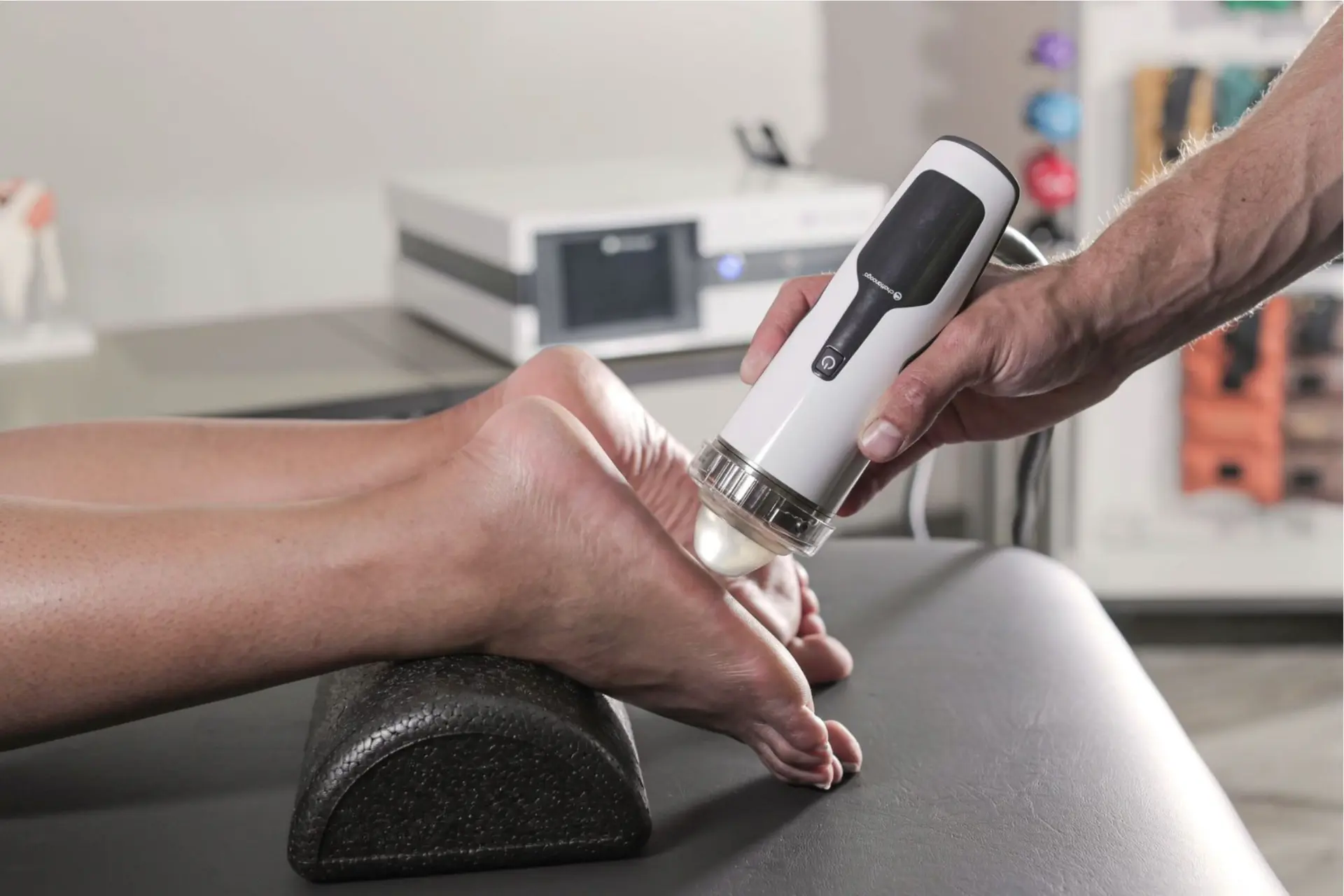
What are venous and arterial ulcers?
A leg ulcer is a wound on the leg or foot that does not heal normally, typically taking more than two weeks to heal.
A venous ulcer develops when blood does not return effectively through the veins, causing increased pressure and changes in the tissues of the lower leg.
An arterial ulcer develops when there is insufficient blood flow through the arteries to supply the tissues with oxygen and nutrients. Arterial ulcers are commonly associated with peripheral arterial disease (PAD).
Symptoms
Symptoms can vary depending on whether the ulcer is primarily venous, arterial or has a mixed cause.
Venous ulcer symptoms can include:
- An open wound, often around the lower leg or ankle
- Swelling around the ankle or lower leg
- Aching, heaviness or discomfort in the leg
- Itching or irritated skin
- Darkening or discolouration of the skin around the ulcer
- Hardened or thickened skin
- Varicose veins
- Fluid or discharge from the wound
Venous ulcers commonly occur on the inside of the lower leg, between the knee and ankle.
Arterial ulcer symptoms can include a wound that is slow to heal or does not heal; pain in the foot or leg, which may be worse when the leg is elevated; pain in the foot at rest in more advanced disease; cold feet or toes; pale, blue or otherwise altered skin colour; reduced hair growth on the lower leg or foot; shiny or thin-looking skin; a wound affecting the foot, toes or pressure areas; and reduced pulses in the foot.
Arterial ulcers are associated with reduced blood supply and can indicate significant peripheral arterial disease.
Causes
Venous ulcers are usually caused by venous hypertension, where blood does not return effectively from the lower leg to the heart. Factors that can contribute include:
- Varicose veins
- Previous deep vein thrombosis (DVT)
- Chronic leg swelling
- Reduced mobility
- Obesity
- Previous leg injury or surgery
- Problems with the valves within the leg veins
Persistent high pressure within the veins can affect the skin and underlying tissues, making them more vulnerable to ulceration.
Arterial ulcers occur when the arteries cannot deliver sufficient blood to the tissues. Common contributing factors include peripheral arterial disease, smoking, diabetes, high blood pressure, high cholesterol, cardiovascular disease, increasing age and previous vascular disease.
Reduced blood flow can limit the oxygen and nutrients available to the tissues, making wounds more difficult to heal.
Some ulcers have mixed venous and arterial causes, making accurate vascular assessment particularly important before treatment is started.
Diagnosis
A leg ulcer should be assessed to identify its underlying cause before an appropriate treatment plan is established.
During your assessment, your clinician may discuss:
- When the ulcer developed
- Any previous ulcers or wounds
- Pain, swelling or changes in the leg
- Your medical and vascular history
- Diabetes and other relevant health conditions
- Smoking and other cardiovascular risk factors
- Your mobility and activity levels
- Previous DVT, varicose veins or vascular procedures
- The location, size and appearance of the ulcer
- The condition of the surrounding skin
Your Advanced Clinical Pharmacist may also assess the circulation to your legs and feet. This can include checking pulses and measuring arterial blood flow using an ankle-brachial pressure index (ABPI) or other vascular tests. Further vascular investigations, such as duplex ultrasound, may be required depending on the findings.
If you have a persistent leg or foot ulcer, you can arrange a consultation with our Advanced Clinical Pharmacist to discuss your symptoms and have the affected area assessed.
Your Advanced Clinical Pharmacist can help identify the likely underlying cause of the ulcer and discuss appropriate treatment or referral where required.
Treatment
Treatment depends on whether the ulcer is venous, arterial or has a mixed cause.
Venous ulcers — treatment may include:
- Wound care: cleaning, dressing and monitoring the ulcer to support healing
- Compression therapy: compression bandaging or stockings are commonly used to improve venous circulation and reduce swelling when arterial circulation is adequate
- Leg elevation: raising the leg when appropriate can help reduce swelling
- Exercise and mobility: maintaining appropriate activity can support circulation and reduce prolonged periods of sitting or standing
- Treatment of venous disease: some patients may require vascular treatment for underlying venous insufficiency
- Infection management: antibiotics may be required if the ulcer becomes clinically infected; antibiotics do not themselves heal an uninfected ulcer
Arterial ulcers — treatment focuses on improving blood supply and protecting the affected tissue. This may include: vascular assessment (determining the severity and location of arterial disease); risk-factor management (addressing smoking, blood pressure, cholesterol, diabetes and other cardiovascular risk factors); wound care (appropriate wound management and protection); vascular intervention (where necessary, vascular procedures may be considered to improve blood flow); exercise therapy (appropriate supervised exercise may form part of treatment for peripheral arterial disease); pain management (particularly where arterial insufficiency is causing significant pain); and specialist wound care (complex or non-healing arterial ulcers may require multidisciplinary vascular and wound-care management).
Focused Shockwave Therapy should not be presented as a routine treatment for venous or arterial ulcers.
The priority for an ulcer is to identify and treat the underlying vascular problem, provide appropriate wound care and address factors preventing healing. In particular, significant arterial insufficiency requires vascular assessment and may require restoration of blood flow before other treatments are considered.
If a patient has a separate musculoskeletal condition around the affected limb, Focused Shockwave Therapy may potentially be considered for that condition following an appropriate clinical assessment. It should not replace vascular assessment or established wound management.
Prevention
Preventing leg ulcers depends on addressing the underlying circulation problem and protecting the skin.
Helpful measures include:
- Staying physically active within your individual ability
- Avoiding prolonged periods of sitting or standing where possible
- Maintaining a healthy weight
- Stopping smoking
- Managing blood pressure, cholesterol and blood glucose
- Looking after the skin on your legs and feet
- Wearing appropriate, well-fitting footwear
- Following prescribed compression treatment when it has been confirmed to be safe and appropriate
- Managing varicose veins or other underlying venous problems where appropriate
- Having previous ulcers monitored to reduce the risk of recurrence
- Seeking assessment promptly if you notice a wound that is not healing normally
If you develop a new ulcer, rapidly increasing pain, spreading redness or swelling, significant changes in skin colour or temperature, a cold or numb foot, or symptoms suggesting infection, seek prompt medical assessment. A suspected arterial ulcer or significant reduction in blood supply may require urgent vascular assessment.
Book your shockwave assessment.
Start with a £55 initial specialist assessment, or book treatment directly if you already have a confirmed diagnosis.
Other conditions treated with focused shockwave therapy
Plantar Fasciitis
Plantar fasciitis is a common cause of heel and foot pain. Here is what to look out for, how it is diagnosed, and the treatment options available — including focused shockwave therapy.
Learn more about plantar fasciitisTennis & Golfer's Elbow
Tennis elbow and golfer's elbow are common causes of pain around the elbow. Here is what to look out for, how they are diagnosed, and the treatment options available — including focused shockwave therapy.
Learn more about tennis & golfer's elbowAchilles Tendinopathy
Achilles tendinopathy is a common cause of pain and stiffness at the back of the ankle. Here is what to look out for, how it is diagnosed, and the treatment options available — including focused shockwave therapy.
Learn more about achilles tendinopathy