
Focused shockwave therapy for Plantar fasciitis.
Plantar fasciitis is a common cause of heel and foot pain. Here is what to look out for, how it is diagnosed, and the treatment options available — including focused shockwave therapy.
What is plantar fasciitis?
Plantar fasciitis is a common cause of heel and foot pain. It occurs when the plantar fascia, a strong band of tissue running along the bottom of the foot from the heel towards the toes, becomes irritated and painful.
The pain is often felt underneath or around the heel and can be particularly noticeable when taking the first few steps after waking up or after sitting for a while.
Symptoms
Common symptoms of plantar fasciitis include:
- Pain underneath the heel or along the sole of the foot
- Sharp or stabbing pain with the first steps in the morning
- Pain after periods of rest, such as getting up after sitting
- Pain that may improve as you move around but return after prolonged activity
- Tenderness when pressing around the heel or plantar fascia
- Stiffness in the foot, particularly after waking or resting
Causes
Plantar fasciitis develops when the plantar fascia is repeatedly placed under stress, causing irritation and sometimes small areas of tissue damage.
Factors that can contribute include:
- Increased walking, running or other physical activity
- Sudden changes in exercise or activity levels
- Tight calf muscles
- Foot mechanics such as flat feet or high arches
- Being overweight or gaining weight
- Spending long periods standing or walking
- Wearing footwear that does not provide adequate support
- Activities that place repeated stress on the heel and foot
- Often, there isn't one single cause; several factors may contribute.
Diagnosis
Plantar fasciitis is usually diagnosed through a clinical assessment. A healthcare professional will ask about your symptoms and activity levels and examine your foot, ankle and calf.
They may check:
- Where your pain is located
- Whether certain movements reproduce your symptoms
- Your foot and ankle movement
- Your walking pattern and foot mechanics
- The strength and flexibility of your calf and foot
Imaging such as an X-ray or ultrasound is not usually required to diagnose plantar fasciitis, but may sometimes be recommended to rule out other causes of heel pain or investigate persistent symptoms.
If you're experiencing persistent heel pain, you can book a consultation with our Advanced Clinical Pharmacist to discuss your symptoms and have your foot assessed. They can help determine whether your symptoms are consistent with plantar fasciitis and discuss appropriate treatment options with you.
Treatment
Most cases of plantar fasciitis improve with conservative treatment. Depending on your symptoms and how long you have been experiencing them, treatment may include activity modification, stretching and strengthening exercises, supportive footwear and physiotherapy.
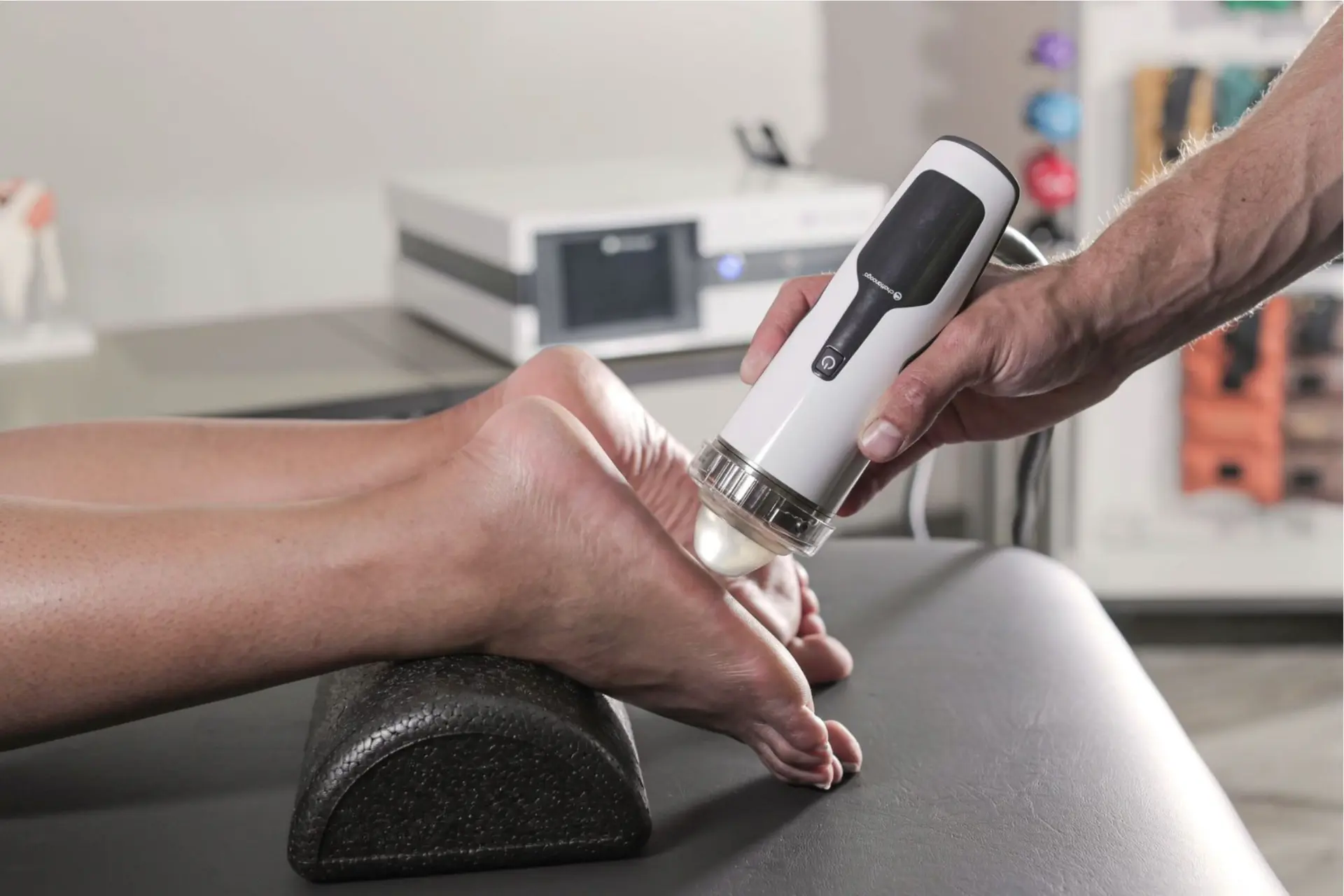
For people with persistent plantar fasciitis who have not responded adequately to more conservative approaches, focused shockwave therapy may be considered as part of a personalised treatment plan.
Our focused shockwave therapy uses targeted acoustic waves to deliver treatment to the affected area.
Prevention
You can reduce your risk of developing plantar fasciitis by:
- Increasing exercise and activity levels gradually
- Wearing comfortable, supportive footwear appropriate for your activity
- Maintaining flexibility in your calves and feet
- Strengthening the muscles of your feet and lower legs
- Avoiding sudden increases in running, walking or standing
- Managing body weight where appropriate
- Taking breaks if your work or activities involve prolonged standing
If heel pain is severe, persistent, worsening, or affecting your ability to walk normally, seek assessment from a qualified healthcare professional.
Book your shockwave assessment.
Start with a £55 initial specialist assessment, or book treatment directly if you already have a confirmed diagnosis.
Other conditions treated with focused shockwave therapy
Tennis & Golfer's Elbow
Tennis elbow and golfer's elbow are common causes of pain around the elbow. Here is what to look out for, how they are diagnosed, and the treatment options available — including focused shockwave therapy.
Learn more about tennis & golfer's elbowAchilles Tendinopathy
Achilles tendinopathy is a common cause of pain and stiffness at the back of the ankle. Here is what to look out for, how it is diagnosed, and the treatment options available — including focused shockwave therapy.
Learn more about achilles tendinopathyPatellar Tendinopathy
Patellar tendinopathy is a common cause of pain at the front of the knee. Here is what to look out for, how it is diagnosed, and the treatment options available — including focused shockwave therapy.
Learn more about patellar tendinopathy