
Focused shockwave therapy for Tennis / golfer's elbow.
Tennis elbow and golfer's elbow are common causes of pain around the elbow. Here is what to look out for, how they are diagnosed, and the treatment options available — including focused shockwave therapy.
What is tennis / golfer's elbow?
Tennis elbow and golfer's elbow are common causes of pain around the elbow. Despite their names, you do not need to play tennis or golf to develop either condition.
Tennis elbow (lateral elbow tendinopathy) affects the tendons that attach to the outside of the elbow and is typically associated with pain on the outer side of the elbow.
Golfer's elbow (medial elbow tendinopathy) affects the tendons that attach to the inside of the elbow and usually causes pain on the inner side.
Both conditions can develop when the tendons are repeatedly loaded, particularly when the amount of activity exceeds what the tendon is currently able to tolerate.
Symptoms
Symptoms can vary depending on whether you have tennis or golfer's elbow, but may include:
- Pain around the inside or outside of the elbow
- Pain when gripping, lifting or carrying objects
- Tenderness around the affected tendon
- Pain when moving the wrist or forearm
- Reduced grip strength
- Stiffness around the elbow
- Pain that gradually develops or becomes worse with repeated activity
- Discomfort during or after sporting activities
With tennis elbow, pain is generally felt on the outside of the elbow, while golfer's elbow typically causes pain on the inside.
Causes
Tennis and golfer's elbow are usually associated with repetitive loading of the muscles and tendons around the forearm and elbow.
Contributing factors can include:
- Repetitive gripping or lifting
- Racquet sports, golf and other sporting activities
- Manual work involving the hands and wrists
- Repeated use of tools or equipment
- Sudden increases in activity
- Changes to training volume or technique
- Poor recovery between activities
- Reduced strength or flexibility in the forearm
You can develop tennis or golfer's elbow even without a specific injury. Symptoms often build gradually over time.
Diagnosis
Tennis and golfer's elbow are usually diagnosed through a clinical assessment. During a consultation, your healthcare professional will discuss your symptoms, activities and medical history before examining your elbow, wrist and forearm.
They may assess:
- The location of your pain
- Elbow and wrist movement
- Grip strength
- Muscle strength and flexibility
- Which movements reproduce your symptoms
- The way your symptoms respond to different types of loading
Imaging is not always necessary, although an ultrasound, X-ray or other investigation may sometimes be recommended if the diagnosis is unclear or other conditions need to be ruled out.
If you're experiencing persistent elbow pain, you can arrange a consultation with our Advanced Clinical Pharmacist to discuss your symptoms and have the affected area assessed. Your Advanced Clinical Pharmacist can help identify the likely cause of your pain and discuss appropriate treatment options.
Treatment
Treatment for tennis or golfer's elbow depends on your symptoms, how long you have had them and the demands you place on your elbow.
Treatment may include:
- Activity modification: temporarily reducing or adapting activities that aggravate your symptoms
- Strengthening exercises: progressively loading the forearm and elbow tendons can help improve their capacity
- Stretching and mobility: exercises may help address restrictions in the wrist, forearm or elbow
- Physiotherapy: an individualised rehabilitation programme can help you gradually return to normal activity
- Support: straps or braces may sometimes be recommended to help manage symptoms during certain activities
- Pain relief: appropriate pain-relieving medication may help with symptoms; speak to a pharmacist or healthcare professional if you're unsure what is suitable for you
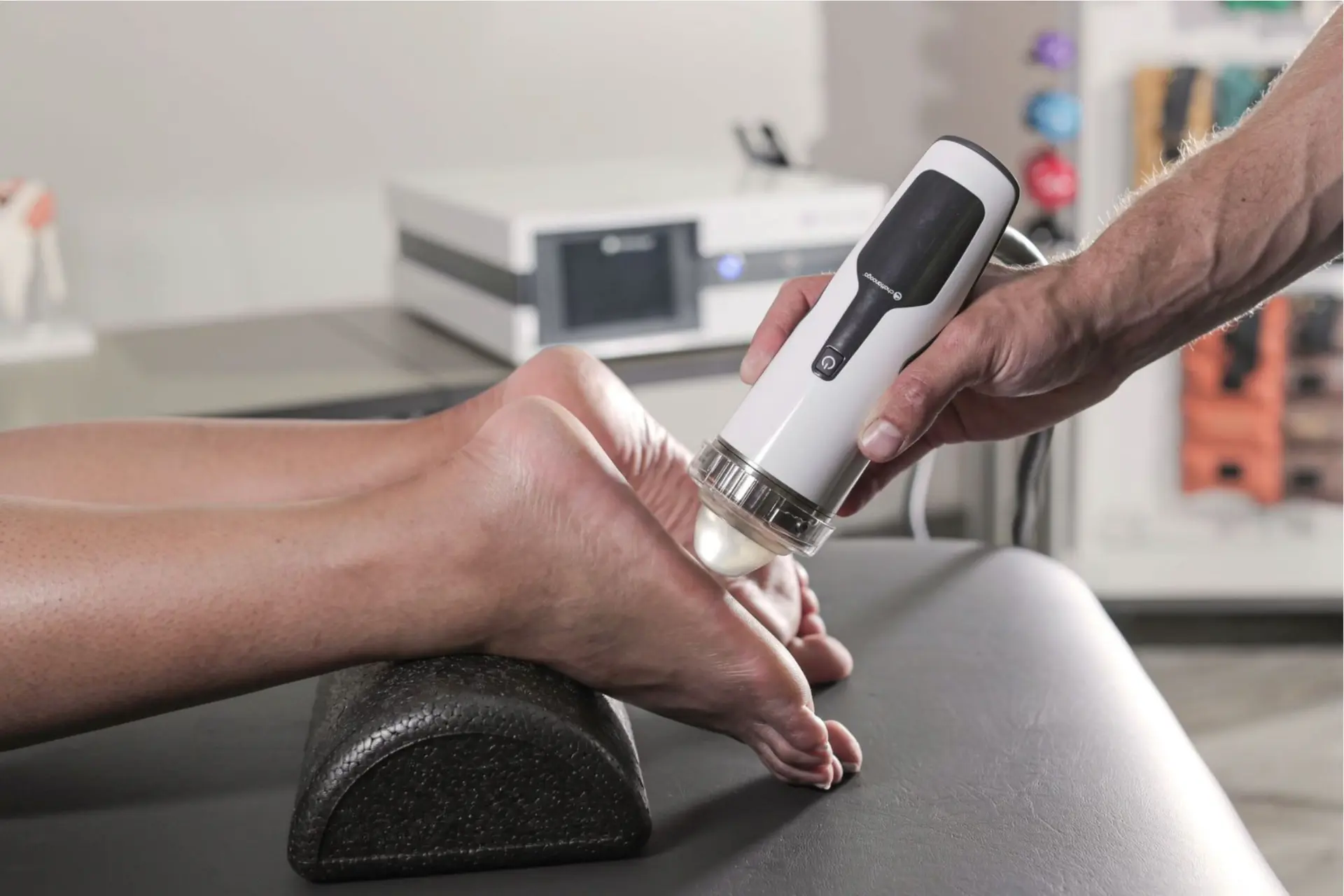
- Focused Shockwave Therapy: may be considered for some people with persistent tendon pain as part of a broader treatment plan
Focused Shockwave Therapy uses targeted acoustic waves to deliver treatment to the affected area. It may be considered when symptoms have persisted despite more conservative approaches, depending on your individual assessment.
Prevention
You can reduce your risk of developing tennis or golfer's elbow by managing how quickly you increase activity and allowing your body time to adapt.
Helpful measures include:
- Increase sporting or physical activity gradually
- Avoid sudden increases in training volume
- Strengthen your forearm, wrist and upper-limb muscles
- Build up gradually when returning to sport after a break
- Take appropriate rest and recovery between demanding activities
- Use suitable equipment and ensure it is appropriate for your activity
- Pay attention to early symptoms rather than repeatedly pushing through pain
- Vary repetitive activities where possible
Book your shockwave assessment.
Start with a £55 initial specialist assessment, or book treatment directly if you already have a confirmed diagnosis.
Other conditions treated with focused shockwave therapy
Plantar Fasciitis
Plantar fasciitis is a common cause of heel and foot pain. Here is what to look out for, how it is diagnosed, and the treatment options available — including focused shockwave therapy.
Learn more about plantar fasciitisAchilles Tendinopathy
Achilles tendinopathy is a common cause of pain and stiffness at the back of the ankle. Here is what to look out for, how it is diagnosed, and the treatment options available — including focused shockwave therapy.
Learn more about achilles tendinopathyPatellar Tendinopathy
Patellar tendinopathy is a common cause of pain at the front of the knee. Here is what to look out for, how it is diagnosed, and the treatment options available — including focused shockwave therapy.
Learn more about patellar tendinopathy