
Focused shockwave therapy for Tibial stress syndrome.
Tibial stress syndrome, commonly known as shin splints, is a common cause of pain along the shin. Here is what to look out for, how it is diagnosed, and the treatment options available — including focused shockwave therapy.
What is tibial stress syndrome?
Tibial stress syndrome is an overuse condition involving pain along the shinbone (tibia), usually along the inner border of the lower leg.
It commonly occurs when the lower leg is exposed to repeated loading, particularly following a change or increase in physical activity.
It often develops in people who participate in running, jumping or other activities that place repeated stress on the lower leg.
Symptoms
Common symptoms of tibial stress syndrome include:
- Pain or tenderness along the inner side of the shin
- Pain that develops during or after exercise
- Pain that may initially improve with rest
- Tenderness along a broader area of the shin rather than one small, specific point
- Stiffness or aching in the lower leg
- Symptoms that become more noticeable following an increase in running, jumping or other impact activity
- In more persistent cases, pain that may continue after exercise
If shin pain becomes severe, is present at rest, or is concentrated in one specific area of the bone, further assessment is important to rule out a more significant bone stress injury.
Causes
Tibial stress syndrome is usually associated with repeated loading of the lower leg.
Factors that may contribute include:
- A sudden increase in running or sporting activity
- Increasing training distance, intensity or frequency too quickly
- Running or exercising on harder or unfamiliar surfaces
- Repeated jumping or other high-impact activities
- Returning to exercise after a period of reduced activity
- Inadequate recovery between demanding sessions
- Changes in footwear or training routines
- Reduced strength or conditioning of the lower leg
The condition can develop when the amount of stress placed on the lower leg increases faster than the body can adapt.
Diagnosis
Tibial stress syndrome is usually diagnosed through a clinical assessment.
During a consultation, your clinician will discuss your symptoms, activity levels and medical history before examining your lower leg.
They may assess:
- The location and nature of your pain
- The area and extent of tenderness
- Your ankle and lower-limb movement
- Calf and lower-limb strength
- Your walking, running or movement patterns where appropriate
- Recent changes to your training or activity levels
Imaging is not always required. However, an X-ray, MRI or other investigation may sometimes be recommended if your symptoms suggest a stress fracture or another cause of shin pain.
If you're experiencing persistent shin pain, you can arrange a consultation with our Advanced Clinical Pharmacist to discuss your symptoms and have the affected area assessed.
Your Advanced Clinical Pharmacist can help identify the likely cause of your symptoms and discuss appropriate treatment options with you.
Treatment
Treatment for tibial stress syndrome depends on the severity of your symptoms and the demands you place on your lower legs.
Treatment may include:
- Activity modification: temporarily reducing or adapting activities that aggravate your symptoms
- Gradual rehabilitation: progressively returning to running and impact activities as symptoms allow
- Strengthening exercises: improving the strength and capacity of the calf and lower-limb muscles
- Physiotherapy: an individualised rehabilitation programme can help address contributing factors and support a return to activity
- Training modification: adjusting training volume, intensity, surfaces or recovery periods where appropriate
- Footwear: reviewing footwear and considering whether changes may be appropriate
- Pain relief: appropriate pain-relieving medication may help with symptoms; speak to a pharmacist or healthcare professional if you're unsure what is suitable for you
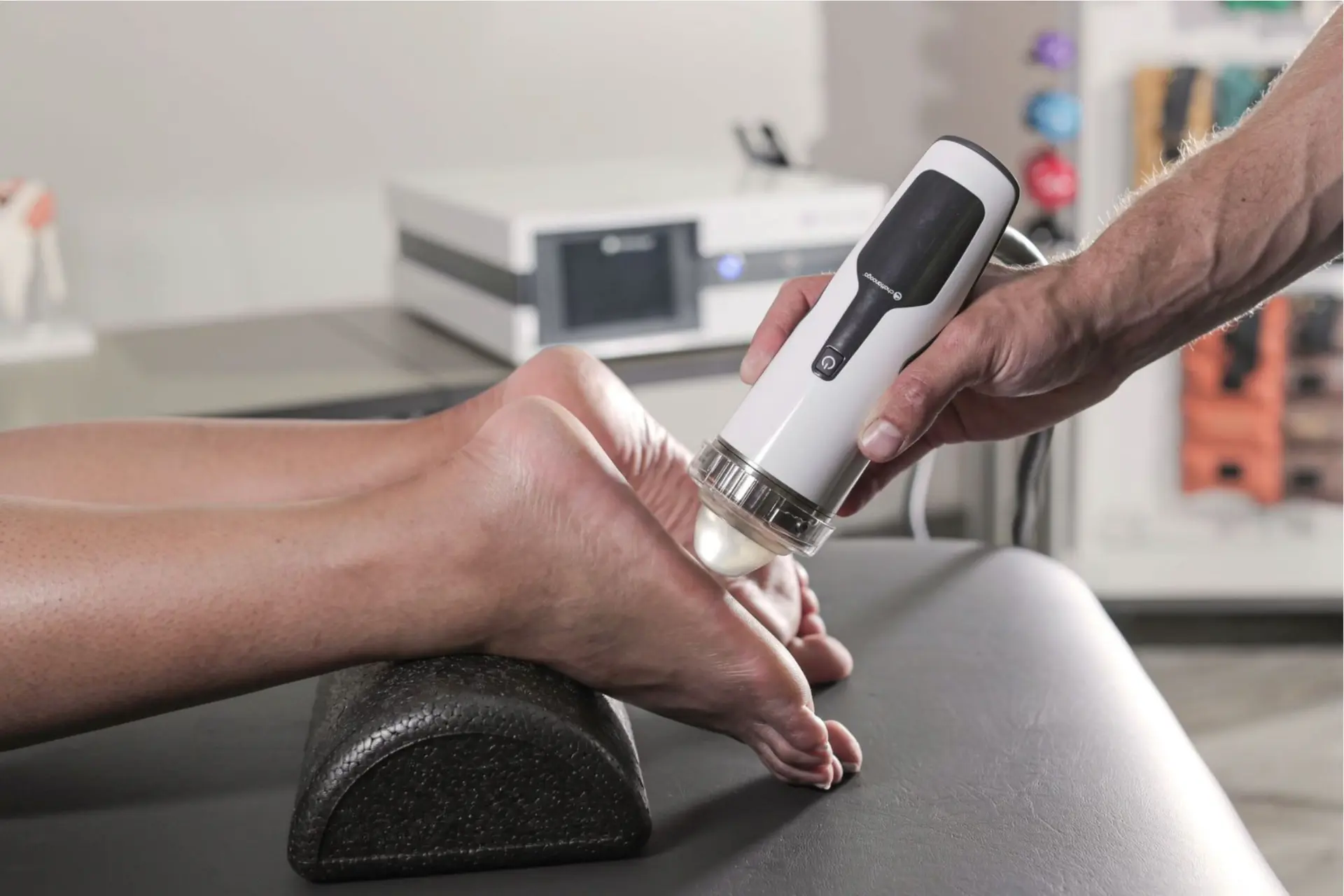
- Focused Shockwave Therapy: may be considered in some cases as part of an appropriate treatment plan
Focused Shockwave Therapy uses targeted acoustic waves to deliver treatment to a specific area. It may be considered for some people with persistent symptoms, depending on their individual assessment and the underlying cause of their pain.
Our Advanced Clinical Pharmacist can assess your symptoms and determine whether Focused Shockwave Therapy is appropriate for you as part of your treatment plan.
Prevention
You can reduce your risk of developing tibial stress syndrome by allowing your body time to adapt to changes in activity.
Helpful measures include:
- Increase running and sporting activity gradually
- Avoid sudden increases in training distance, intensity or frequency
- Allow adequate recovery between high-impact sessions
- Strengthen your calf and lower-limb muscles regularly
- Build up gradually when returning to exercise after a break
- Consider changes in training surfaces when increasing activity
- Make sure your footwear is appropriate for your activity
- Pay attention to persistent shin pain rather than repeatedly training through it
If you have severe or worsening shin pain, pain at rest, or pain that is localised to one specific area of the bone, seek assessment from a qualified healthcare professional.
Book your shockwave assessment.
Start with a £55 initial specialist assessment, or book treatment directly if you already have a confirmed diagnosis.
Other conditions treated with focused shockwave therapy
Plantar Fasciitis
Plantar fasciitis is a common cause of heel and foot pain. Here is what to look out for, how it is diagnosed, and the treatment options available — including focused shockwave therapy.
Learn more about plantar fasciitisTennis & Golfer's Elbow
Tennis elbow and golfer's elbow are common causes of pain around the elbow. Here is what to look out for, how they are diagnosed, and the treatment options available — including focused shockwave therapy.
Learn more about tennis & golfer's elbowAchilles Tendinopathy
Achilles tendinopathy is a common cause of pain and stiffness at the back of the ankle. Here is what to look out for, how it is diagnosed, and the treatment options available — including focused shockwave therapy.
Learn more about achilles tendinopathy