
Focused shockwave therapy for Peyronie's disease.
Peyronie's disease is a condition that causes scar tissue, or plaque, to develop within the penis. Here is what to look out for, how it is diagnosed, and the treatment options available — including focused shockwave therapy.
What is Peyronie's disease?
Peyronie's disease occurs when scar tissue forms within the fibrous tissue surrounding the erectile chambers of the penis. As the scar tissue develops, it can cause the penis to curve or change shape during an erection.
The condition can lead to penile curvature, pain during erections and, in some cases, difficulties with sexual activity or erectile function.
It can develop gradually and may change over time, particularly during the active phase of the disease.
Symptoms
Symptoms of Peyronie's disease can include:
- A noticeable curve or bend in the penis during erection
- Pain during erections
- A firm lump or area of thickened tissue within the penis
- Changes in penile shape or narrowing
- An hourglass appearance or indentation
- Reduced penile length
- Difficulty with sexual intercourse because of the curvature
- Erectile dysfunction
- Anxiety, distress or reduced confidence related to changes in sexual function
The symptoms and severity can vary considerably between individuals.
Causes
The exact cause of Peyronie's disease is not fully understood. It is thought to involve abnormal scar-tissue formation within the penis.
Factors that may contribute include:
- Repeated minor injury or trauma to the penis
- Injury occurring during sexual activity
- The body's healing response to tissue damage
- Increasing age
- A family history of Peyronie's disease
- Certain connective-tissue conditions
- Conditions associated with erectile dysfunction
Not everyone with Peyronie's disease will be able to identify a specific injury or event that caused it.
Diagnosis
Peyronie's disease is usually diagnosed through a detailed medical and sexual history combined with a physical examination.
During your assessment, your clinician may discuss:
- When the symptoms began and whether they are changing
- Any pain during erections
- The degree and direction of penile curvature
- Changes in penile length or shape
- Any difficulty with sexual intercourse
- Erectile function
- Any previous injury or trauma
- The effect the condition is having on your wellbeing and sexual function
Your Advanced Clinical Pharmacist may examine the penis for palpable plaques or areas of thickened tissue. Assessment of penile curvature may involve photographs of an erection or, when appropriate, an induced erection. Penile Doppler ultrasound may also be considered, particularly when erectile dysfunction is present or further assessment of blood flow is required.
If you're experiencing penile curvature, pain during erections or changes in sexual function, you can arrange a consultation with our Advanced Clinical Pharmacist to discuss your symptoms and have the affected area assessed.
Your Advanced Clinical Pharmacist can help identify the likely cause of your symptoms and discuss appropriate treatment options with you.
Treatment
Treatment for Peyronie's disease depends on the severity of the symptoms, whether the condition is still changing, the degree of curvature and whether sexual function is affected.
Treatment options may include:
- Monitoring: some men with mild symptoms may be monitored, particularly where the condition is not significantly affecting sexual function
- Pain relief: anti-inflammatory medication may be used to help manage penile pain during the active phase when appropriate
- Penile traction therapy: traction devices may be considered as part of non-surgical treatment for selected patients
- Treatment for erectile dysfunction: where erectile dysfunction occurs alongside Peyronie's disease, appropriate ED treatment may be considered
- Injection treatments: selected patients may be considered for intralesional treatments depending on the characteristics of their disease and local availability
- Surgery: for men with stable disease and significant deformity that interferes with sexual intercourse, surgical correction may be considered following specialist assessment
- Focused Shockwave Therapy: shockwave treatment may be considered in selected patients to help manage penile pain, particularly during the active phase. Current evidence does not support using shockwave therapy to straighten the penis or reduce plaque size
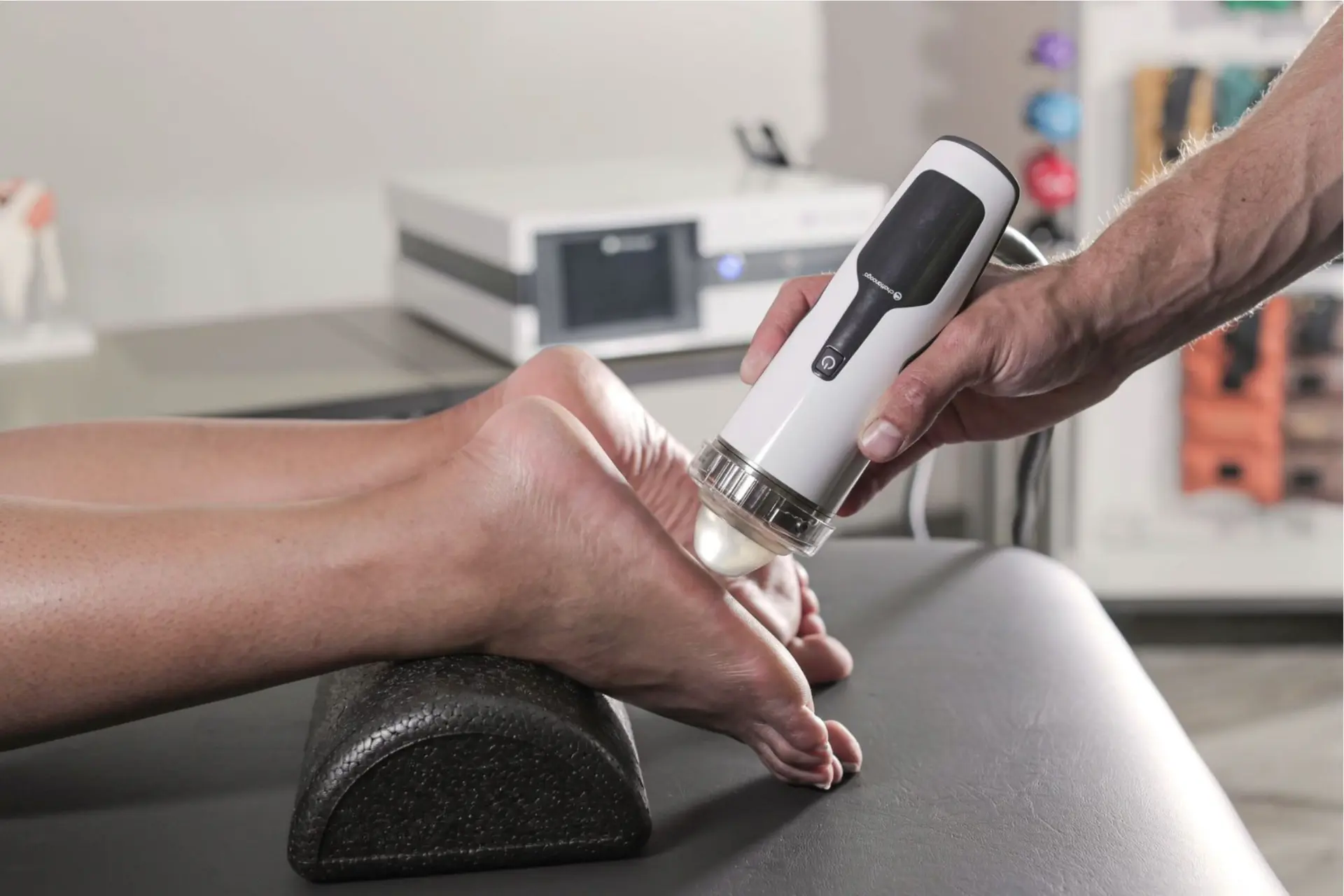
Focused Shockwave Therapy uses targeted acoustic waves delivered to the affected area. For Peyronie's disease, current evidence suggests that extracorporeal shockwave treatment may help reduce penile pain in some men, particularly during the active phase of the condition. However, it should not be presented as a treatment for correcting penile curvature or reducing the size of Peyronie's plaques.
Our Advanced Clinical Pharmacist can assess your symptoms and discuss whether Focused Shockwave Therapy may be appropriate for you as part of an individualised treatment plan.
Prevention
There is no guaranteed way to prevent Peyronie's disease, as its exact cause is not fully understood.
Measures that may help reduce the risk of penile injury include:
- Taking care during sexual activity to reduce the risk of penile trauma
- Avoiding forceful bending of an erect penis
- Seeking assessment after significant penile injury
- Addressing erectile dysfunction where present
- Seeking medical advice if new curvature, pain or changes in penile shape develop
- Following recommended treatment and monitoring if Peyronie's disease has already been diagnosed
If you notice a new or worsening penile curvature, persistent pain during erections or difficulties with sexual function, arrange an assessment with a qualified healthcare professional.
Book your shockwave assessment.
Start with a £55 initial specialist assessment, or book treatment directly if you already have a confirmed diagnosis.
Other conditions treated with focused shockwave therapy
Plantar Fasciitis
Plantar fasciitis is a common cause of heel and foot pain. Here is what to look out for, how it is diagnosed, and the treatment options available — including focused shockwave therapy.
Learn more about plantar fasciitisTennis & Golfer's Elbow
Tennis elbow and golfer's elbow are common causes of pain around the elbow. Here is what to look out for, how they are diagnosed, and the treatment options available — including focused shockwave therapy.
Learn more about tennis & golfer's elbowAchilles Tendinopathy
Achilles tendinopathy is a common cause of pain and stiffness at the back of the ankle. Here is what to look out for, how it is diagnosed, and the treatment options available — including focused shockwave therapy.
Learn more about achilles tendinopathy