
Focused shockwave therapy for Lymphoedema.
Lymphoedema is a long-term condition that causes swelling when the lymphatic system is unable to drain fluid effectively. It most commonly affects the arms or legs, but can affect other areas of the body.
What is lymphoedema?
Lymphoedema develops when the lymphatic system does not work properly, causing fluid to build up in the tissues. It can be present from birth or develop later in life following damage to the lymphatic system.
Lymphoedema can become more persistent over time, particularly without appropriate management. Early assessment and treatment can help control swelling and reduce the risk of complications.
Symptoms
Symptoms can vary depending on the part of the body affected and the stage of the condition. They may include:
- Swelling in part or all of an arm, leg or other affected area
- A feeling of heaviness, aching or tightness
- Skin that feels stretched or tight
- Difficulty fitting into clothes, shoes, watches or jewellery
- Swelling that may initially come and go or be worse later in the day
- Reduced movement or difficulty using the affected limb
- Skin becoming thicker, harder or less flexible over time
- Skin folds or changes in texture
- Repeated skin infections, particularly cellulitis
- In more advanced cases, fluid leaking through the skin
Causes
There are two main types of lymphoedema:
- Primary lymphoedema: caused by differences in the development or function of the lymphatic system. It can develop at different stages of life, including childhood, adolescence or adulthood
- Secondary lymphoedema: develops when the lymphatic system has been damaged or its function has been affected. Causes can include cancer and cancer treatment, surgery involving lymph nodes, infection, injury, inflammation or reduced movement
Other factors can influence the severity of swelling, including body weight, activity levels and recurrent infections.
Diagnosis
Lymphoedema is usually diagnosed through a detailed assessment of your symptoms, medical history and the affected area. Your Advanced Clinical Pharmacist may assess the location and pattern of swelling, skin condition, movement, previous surgery or cancer treatment, previous episodes of infection and any factors that may be contributing to the swelling.
Measurements of the affected limb may be taken to monitor changes in size or volume. Further investigations, such as ultrasound, MRI or specialist lymphatic imaging, may sometimes be recommended if the diagnosis is uncertain or another cause of swelling needs to be excluded.
If you're experiencing persistent swelling or other symptoms that may be associated with lymphoedema, you can arrange a consultation with our Advanced Clinical Pharmacist to discuss your symptoms and have the affected area assessed. Your Advanced Clinical Pharmacist can help identify the likely cause of your symptoms and discuss appropriate treatment options with you.
Treatment
There is currently no cure for lymphoedema, but treatment can help control swelling, maintain mobility and reduce the risk of complications. Treatment is usually tailored to the individual and may include:
- Compression therapy: compression garments or bandages can help limit fluid build-up and support lymphatic drainage
- Exercise and movement: appropriate movement uses the muscles to help move lymphatic fluid and maintain strength and mobility
- Skin care: keeping the skin clean, moisturised and intact can help reduce the risk of infections such as cellulitis
- Manual lymphatic drainage: a specialist therapist may use specific massage techniques to encourage the movement of lymphatic fluid in appropriate patients
- Self-management: you may be taught techniques such as simple lymphatic drainage, along with advice about compression, exercise and skin care
- Weight management: where appropriate, maintaining a healthy weight can support overall lymphoedema management
- Specialist treatment: severe or persistent lymphoedema may sometimes require assessment for specialist procedures or surgery
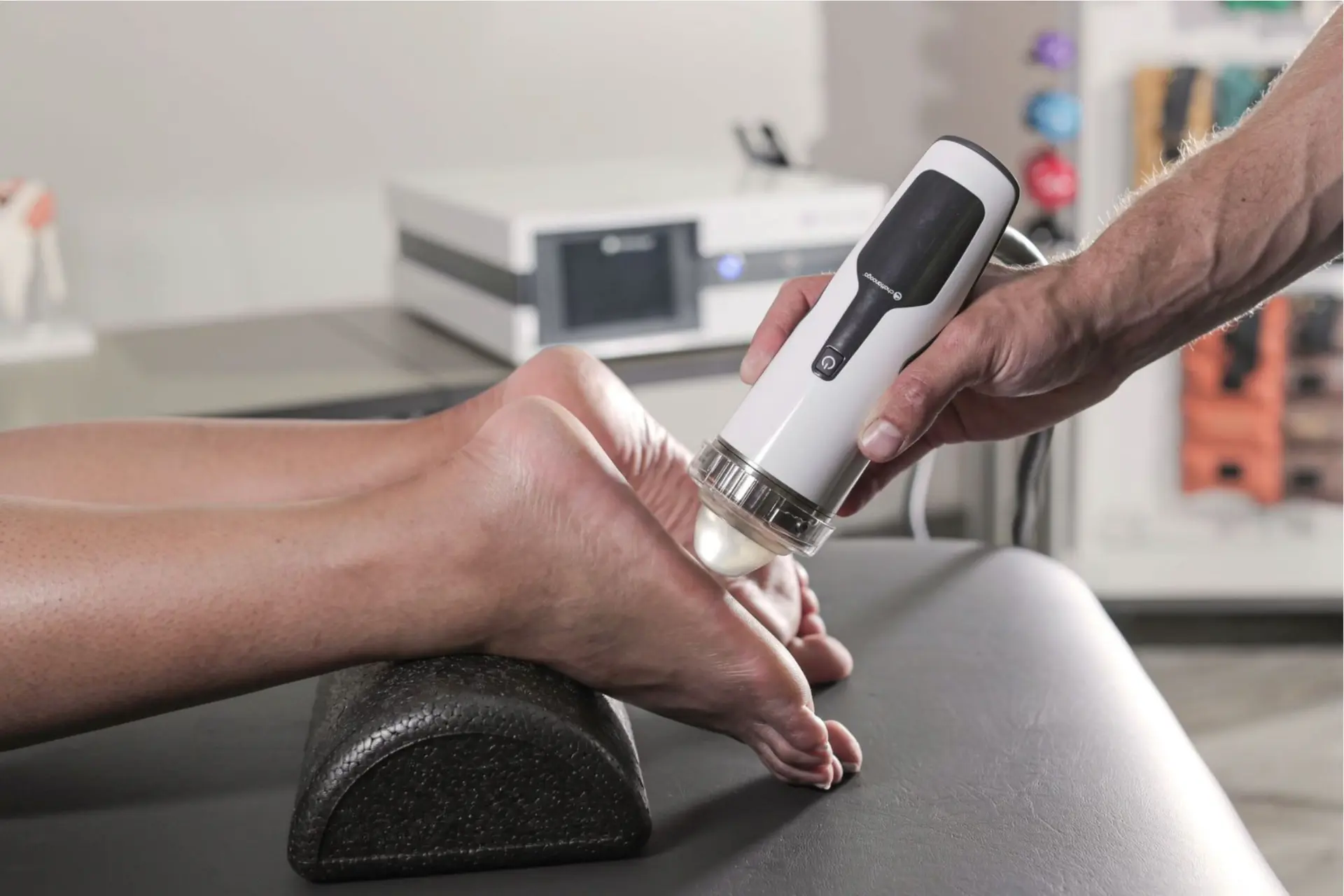
Focused Shockwave Therapy is not a replacement for standard lymphoedema management such as compression, exercise, skin care and specialist lymphoedema therapy.
Some clinical research has investigated extracorporeal shockwave therapy as an additional treatment for lymphoedema, particularly breast-cancer-related lymphoedema. A systematic review and meta-analysis found possible improvements in measures such as limb volume and skin thickness when shockwave therapy was combined with conventional treatment, but the evidence was rated very low certainty and was not sufficient to support replacing standard therapy.
For selected patients, Focused Shockwave Therapy may therefore be discussed as an adjunct to an appropriate treatment programme, depending on the cause and characteristics of the lymphoedema.
Our Advanced Clinical Pharmacist can assess your symptoms and discuss whether Focused Shockwave Therapy may be appropriate as part of your wider treatment plan.
Prevention
Not all lymphoedema can be prevented, particularly when it is caused by an underlying problem with the lymphatic system. However, appropriate self-care can help reduce complications and support long-term management.
Helpful measures include:
- Staying active and maintaining regular movement
- Following your recommended compression programme
- Looking after your skin and treating cuts or irritation promptly
- Keeping the skin moisturised
- Maintaining a healthy weight where appropriate
- Following advice from your lymphoedema specialist
- Seeking assessment if swelling changes or becomes more difficult to manage
- Being aware of the signs of cellulitis, including increasing redness, warmth, pain, swelling or feeling unwell
If an affected area becomes red, hot, painful or increasingly swollen, particularly if you develop a high temperature or feel hot, cold or shivery, seek prompt medical assessment as this may indicate cellulitis.
Book your shockwave assessment.
Start with a £55 initial specialist assessment, or book treatment directly if you already have a confirmed diagnosis.
Other conditions treated with focused shockwave therapy
Plantar Fasciitis
Plantar fasciitis is a common cause of heel and foot pain. Here is what to look out for, how it is diagnosed, and the treatment options available — including focused shockwave therapy.
Learn more about plantar fasciitisTennis & Golfer's Elbow
Tennis elbow and golfer's elbow are common causes of pain around the elbow. Here is what to look out for, how they are diagnosed, and the treatment options available — including focused shockwave therapy.
Learn more about tennis & golfer's elbowAchilles Tendinopathy
Achilles tendinopathy is a common cause of pain and stiffness at the back of the ankle. Here is what to look out for, how it is diagnosed, and the treatment options available — including focused shockwave therapy.
Learn more about achilles tendinopathy