
Focused shockwave therapy for Lipoedema.
Lipoedema is a long-term condition involving an abnormal distribution and build-up of fatty tissue, most commonly affecting the legs and sometimes the arms. It can cause disproportionate changes in body shape, as well as pain, tenderness, heaviness and easy bruising.
What is lipoedema?
Lipoedema is a condition in which fatty tissue accumulates disproportionately, usually affecting both sides of the body. It most commonly affects the hips, thighs and lower legs, while the feet are usually unaffected. The arms can also be affected in some people.
Lipoedema is different from simply being overweight and can occur in people of different body sizes. It can also be confused with other causes of swelling, such as lymphoedema or oedema.
Symptoms
Symptoms can vary from person to person and may include:
- Legs, thighs, hips or arms appearing disproportionate to the rest of the body
- Swelling or enlargement affecting both sides of the body
- Pain, tenderness or sensitivity in the affected areas
- A feeling of heaviness in the legs or arms
- Easy bruising
- Soft or dimpled skin with an uneven or “orange peel” appearance
- Difficulty with movement or physical activity as symptoms progress
- Changes in body shape that may affect confidence and quality of life
The feet and hands are usually unaffected, which can help distinguish lipoedema from some other causes of limb swelling.
Causes
The exact cause of lipoedema is not fully understood. It appears to be influenced by a combination of factors, including:
- Hormonal changes: symptoms may develop or become more noticeable around puberty, pregnancy or menopause
- Family history: lipoedema can sometimes occur in several members of the same family
- Changes in fat distribution: the condition affects how fatty tissue is distributed and stored in the body
- Individual factors: hormonal, genetic and connective-tissue factors may all contribute
Lipoedema is not simply caused by being overweight, and losing weight does not necessarily remove the affected fatty tissue.
Diagnosis
There is no single blood test or scan that confirms lipoedema. Diagnosis is generally based on your symptoms, medical history and a physical examination.
Your Advanced Clinical Pharmacist may assess the distribution of fatty tissue, whether both sides of the body are affected, areas of pain or tenderness, bruising, swelling and whether your feet are affected.
Your Advanced Clinical Pharmacist may also consider other possible causes of enlarged or swollen limbs, such as lymphoedema or other vascular or fluid-related conditions. Further assessment or investigations may be recommended where the diagnosis is uncertain.
If you're experiencing symptoms that may be associated with lipoedema, you can arrange a consultation with our Advanced Clinical Pharmacist to discuss your symptoms and have the affected area assessed. Your Advanced Clinical Pharmacist can help identify the likely cause of your symptoms and discuss appropriate treatment options with you.
Treatment
There is currently no cure for lipoedema, but treatment can help manage symptoms and improve comfort, mobility and quality of life. Treatment is tailored to the individual and may include:
- Compression therapy: specially fitted compression garments may help reduce discomfort and make movement easier
- Exercise and physical activity: regular, appropriate movement can support mobility, strength and general health
- Healthy lifestyle: a balanced diet and maintaining a healthy weight can support overall health, although lipoedema is not simply caused by being overweight
- Skin care: keeping the skin moisturised and healthy can help reduce the risk of skin problems
- Physiotherapy and rehabilitation: exercise and movement programmes can be adapted to your symptoms and physical ability
- Psychological support: counselling or other support may be useful where lipoedema is affecting confidence, wellbeing or quality of life
- Specialist treatment: in selected people with severe symptoms, specialist surgical treatment such as liposuction may be considered. This requires appropriate specialist assessment and discussion of potential benefits and risks
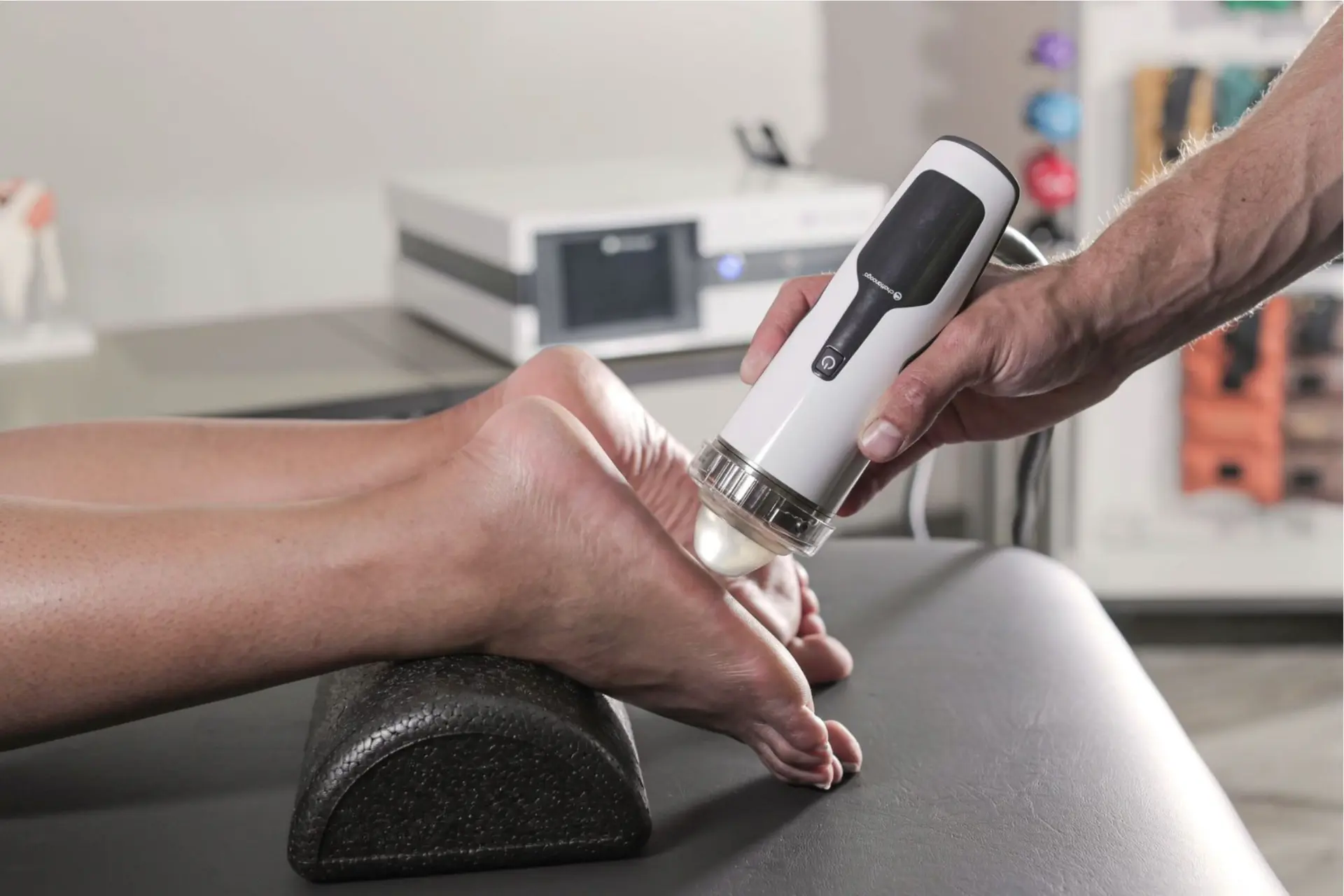
Focused Shockwave Therapy is not a standard treatment for the underlying fatty-tissue changes of lipoedema. If you also have a separate musculoskeletal problem, such as tendon or soft-tissue pain, Focused Shockwave Therapy may sometimes be considered for that specific condition following an individual assessment.
Our Advanced Clinical Pharmacist can assess your symptoms and determine whether Focused Shockwave Therapy is appropriate for any associated musculoskeletal problem as part of your wider treatment plan.
Prevention
There is no guaranteed way to prevent lipoedema, particularly because its exact cause is not fully understood. However, maintaining general health and physical function may help with symptom management.
Helpful measures include:
- Staying physically active within your abilities
- Maintaining muscle strength and mobility
- Avoiding prolonged periods of inactivity
- Maintaining a balanced diet and healthy lifestyle
- Looking after your skin and treating cuts or irritation promptly
- Using compression if it has been recommended by an appropriately trained clinician
- Seeking assessment if symptoms are changing or becoming more difficult to manage
If swelling becomes sudden, severe, red, hot or painful, particularly if you feel unwell, seek prompt medical assessment as this may indicate another condition such as an infection.
Book your shockwave assessment.
Start with a £55 initial specialist assessment, or book treatment directly if you already have a confirmed diagnosis.
Other conditions treated with focused shockwave therapy
Plantar Fasciitis
Plantar fasciitis is a common cause of heel and foot pain. Here is what to look out for, how it is diagnosed, and the treatment options available — including focused shockwave therapy.
Learn more about plantar fasciitisTennis & Golfer's Elbow
Tennis elbow and golfer's elbow are common causes of pain around the elbow. Here is what to look out for, how they are diagnosed, and the treatment options available — including focused shockwave therapy.
Learn more about tennis & golfer's elbowAchilles Tendinopathy
Achilles tendinopathy is a common cause of pain and stiffness at the back of the ankle. Here is what to look out for, how it is diagnosed, and the treatment options available — including focused shockwave therapy.
Learn more about achilles tendinopathy