
Focused shockwave therapy for Calcific shoulder tendinopathy.
Calcific shoulder tendinopathy is a condition where deposits of calcium build up within one or more of the tendons around the shoulder. Here is what to look out for, how it is diagnosed, and the treatment options available — including focused shockwave therapy.
What is calcific shoulder tendinopathy?
Calcific shoulder tendinopathy occurs when calcium deposits develop within the rotator cuff tendons of the shoulder.
The deposits can be present without causing symptoms, but they can sometimes lead to pain and inflammation around the shoulder, particularly when the deposits become irritated or are being naturally reabsorbed by the body.
Symptoms
Common symptoms of calcific shoulder tendinopathy include:
- Pain around the shoulder
- Pain when lifting or moving the arm
- Difficulty or discomfort reaching overhead
- Shoulder stiffness or reduced range of movement
- Pain that can interfere with sleep, particularly when lying on the affected side
- Weakness or difficulty using the affected arm
- Pain that may develop gradually or sometimes become suddenly severe
Symptoms can vary depending on the size and location of the calcium deposit and the stage of the condition.
Causes
The exact cause of calcium deposits forming within the rotator cuff tendons is not fully understood.
Factors associated with calcific shoulder tendinopathy may include:
- Changes within the tendon over time
- Repeated loading of the shoulder
- Rotator cuff dysfunction
- Reduced shoulder movement or strength
- Age-related changes within the tendon
Calcific shoulder tendinopathy is not necessarily caused by a specific injury or by overuse, and calcium deposits can sometimes be present without causing any symptoms.
Diagnosis
Calcific shoulder tendinopathy is usually diagnosed through a clinical assessment, often alongside imaging.
During a consultation, your clinician will discuss your symptoms and medical history before assessing your shoulder movement, strength and function.
An X-ray or ultrasound can be used to identify calcium deposits and assess the affected tendon. Other imaging may sometimes be recommended if another cause of shoulder pain needs to be investigated.
If you're experiencing persistent shoulder pain or restricted movement, you can arrange a consultation with our Advanced Clinical Pharmacist to discuss your symptoms and have your shoulder assessed.
Your Advanced Clinical Pharmacist can help identify the likely cause of your symptoms and discuss appropriate treatment options with you.
Treatment
Treatment for calcific shoulder tendinopathy depends on your symptoms, the location and size of the calcium deposit and how your shoulder is functioning.
Treatment may include:
- Activity modification: temporarily reducing or adapting activities that aggravate your symptoms
- Exercises: maintaining and gradually improving shoulder movement and strength
- Physiotherapy: an individualised rehabilitation programme can help restore shoulder function
- Pain relief: appropriate pain-relieving medication may help with symptoms; speak to a pharmacist or healthcare professional if you're unsure what is suitable for you
- Focused Shockwave Therapy: may be considered for suitable patients with symptomatic calcific deposits
- Other procedures: in some cases, treatments such as ultrasound-guided lavage or injections may be considered depending on the individual assessment
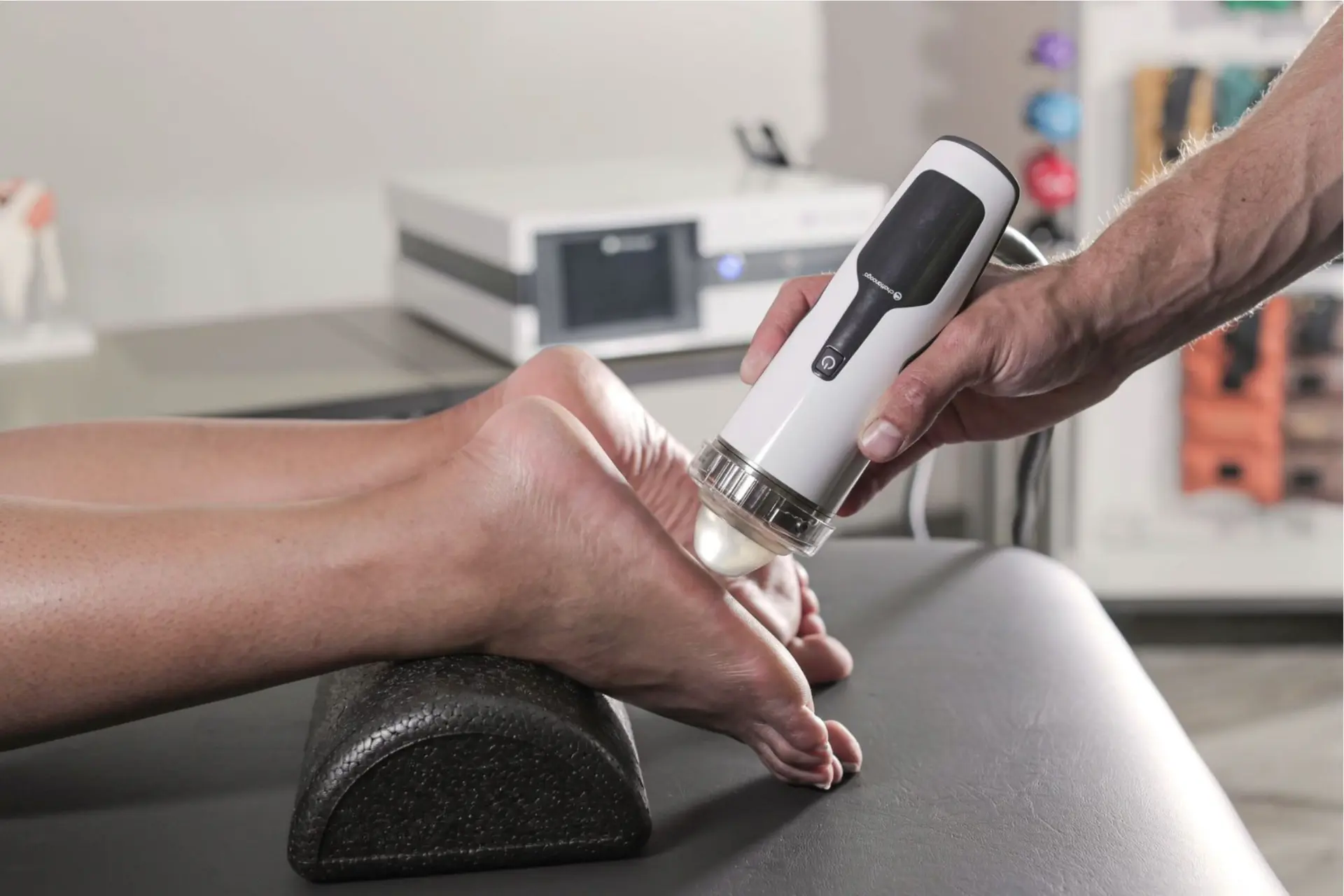
Focused Shockwave Therapy uses targeted acoustic waves to deliver treatment to the affected area. It may be considered for people with symptomatic calcific shoulder tendinopathy, depending on their individual assessment.
Our Advanced Clinical Pharmacist can assess your symptoms and review your imaging where appropriate to determine whether Focused Shockwave Therapy may be suitable for you as part of your treatment plan.
Prevention
There is no guaranteed way to prevent calcific shoulder tendinopathy because the exact cause of calcium deposits is not fully understood.
However, maintaining good shoulder function may help support overall shoulder health.
Helpful measures include:
- Maintain shoulder strength and mobility
- Gradually increase activities that place demand on the shoulder
- Avoid sudden increases in repetitive overhead activity
- Address persistent shoulder pain or stiffness early
- Follow an appropriate rehabilitation programme after a shoulder injury
If you have persistent, severe or worsening shoulder pain, particularly if it significantly limits your ability to move your arm, seek assessment from a qualified healthcare professional.
Book your shockwave assessment.
Start with a £55 initial specialist assessment, or book treatment directly if you already have a confirmed diagnosis.
Other conditions treated with focused shockwave therapy
Plantar Fasciitis
Plantar fasciitis is a common cause of heel and foot pain. Here is what to look out for, how it is diagnosed, and the treatment options available — including focused shockwave therapy.
Learn more about plantar fasciitisTennis & Golfer's Elbow
Tennis elbow and golfer's elbow are common causes of pain around the elbow. Here is what to look out for, how they are diagnosed, and the treatment options available — including focused shockwave therapy.
Learn more about tennis & golfer's elbowAchilles Tendinopathy
Achilles tendinopathy is a common cause of pain and stiffness at the back of the ankle. Here is what to look out for, how it is diagnosed, and the treatment options available — including focused shockwave therapy.
Learn more about achilles tendinopathy